Discover / Heritage
Five Thousand Years,
Still Standing
In Paphos, history is not behind glass. You walk through it, touch it, stand where Romans stood and apostles preached. This is living archaeology.
The Layers
From Mythology
To Medieval Walls
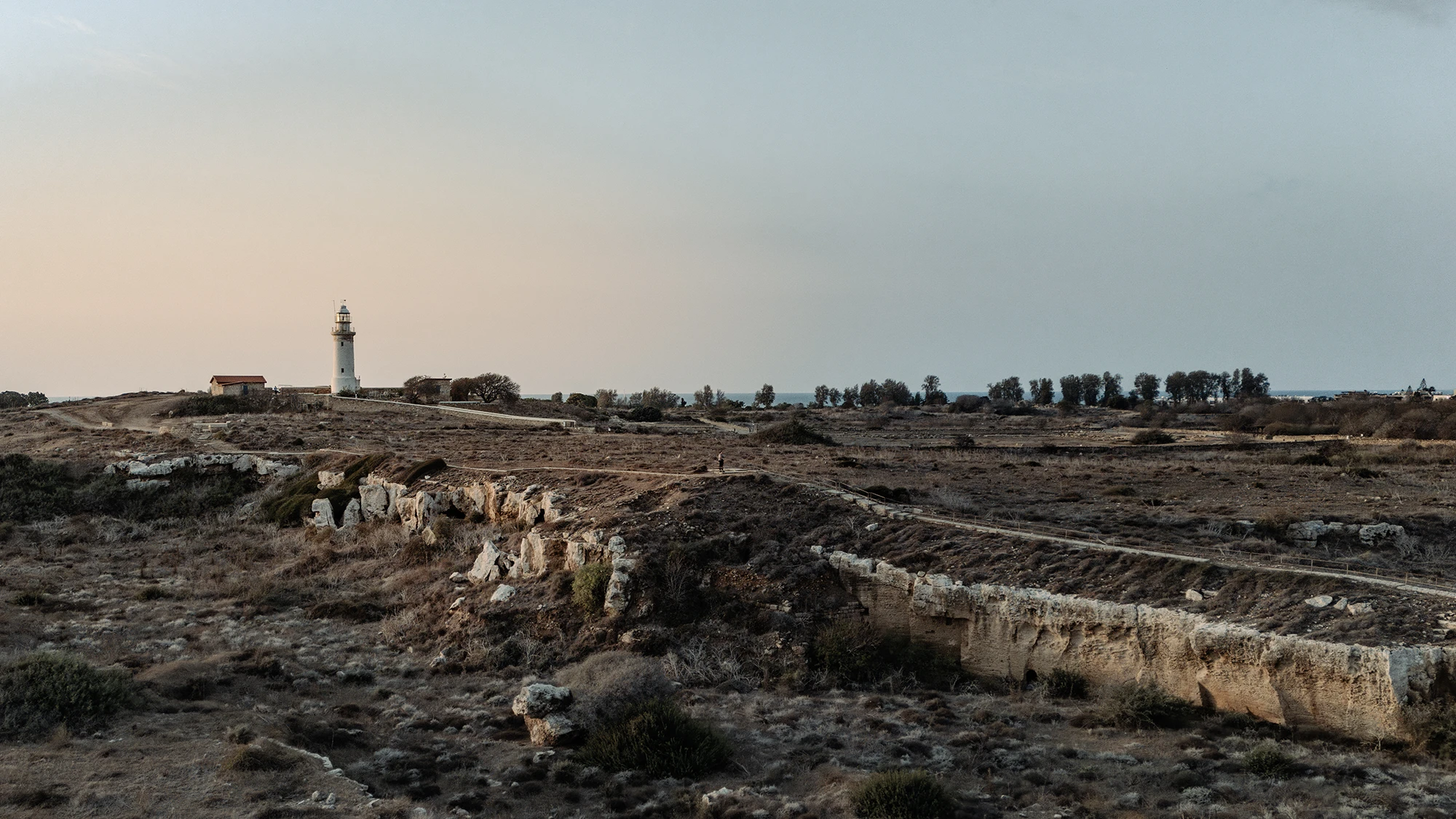
Paphos holds a continuous archaeological record stretching from the Neolithic era through Hellenistic tombs, Roman villas, early Christian basilicas, and Lusignan fortifications. UNESCO inscribed the entire district for good reason — few places on earth compress so many civilisations into such a walkable space. Every excavation reveals another century, another story, another way of understanding the Mediterranean.
01 — UNESCO World Heritage
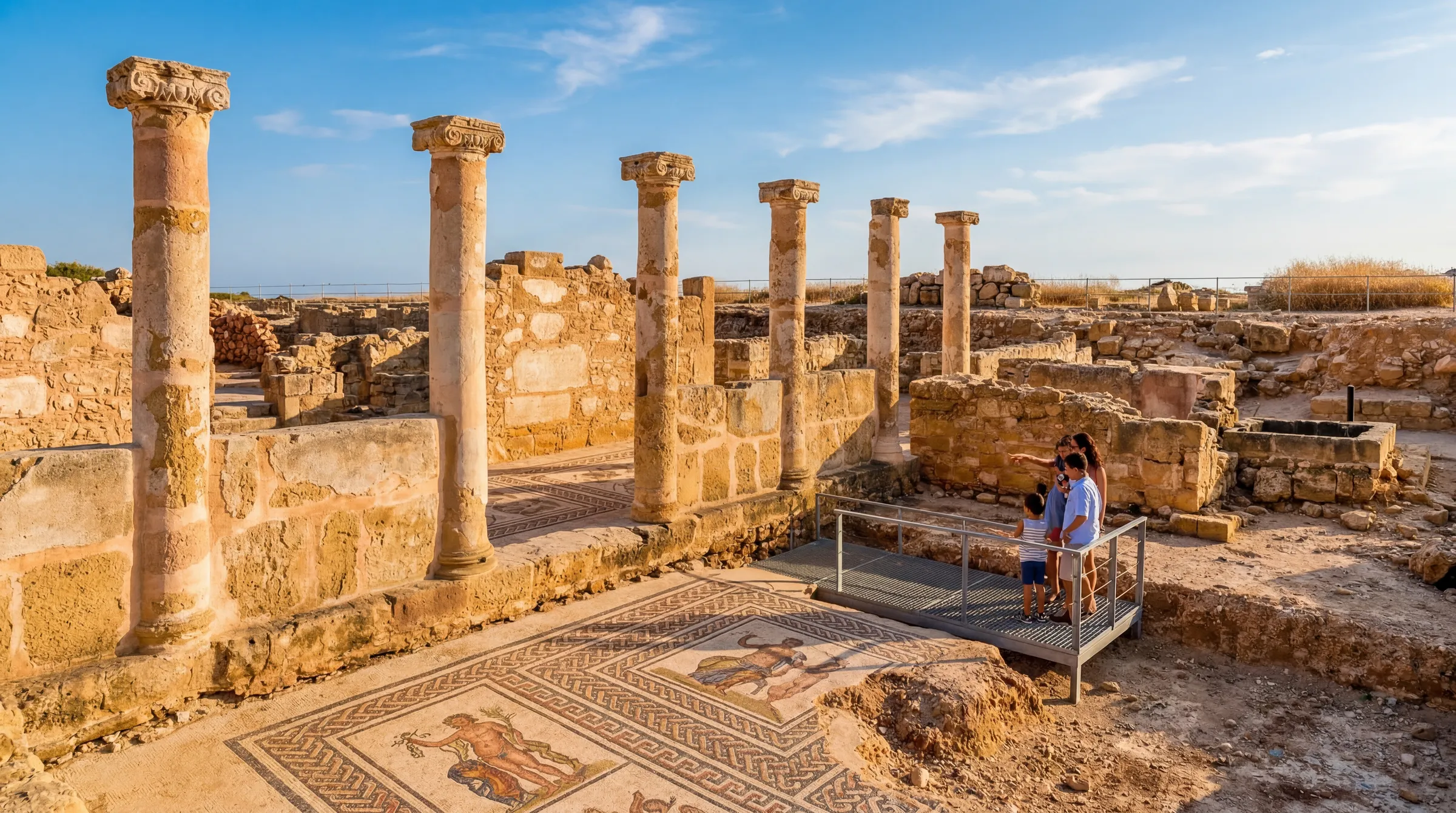
Paphos Archaeological Park
The House of Dionysos alone covers 2,000 square metres, with 556 square metres of intricate floor mosaics depicting mythological scenes in astonishing detail. The House of Theseus is the largest known Roman public building in Cyprus. Nearby stand the 2nd-century Odeon, the ancient Agora, the healing sanctuary of Asklepieion, and the ruins of Saranta Kolones castle. The 4th-century House of Aion completes one of the most remarkable open-air museums in the Mediterranean.
02 — Royal Necropolis
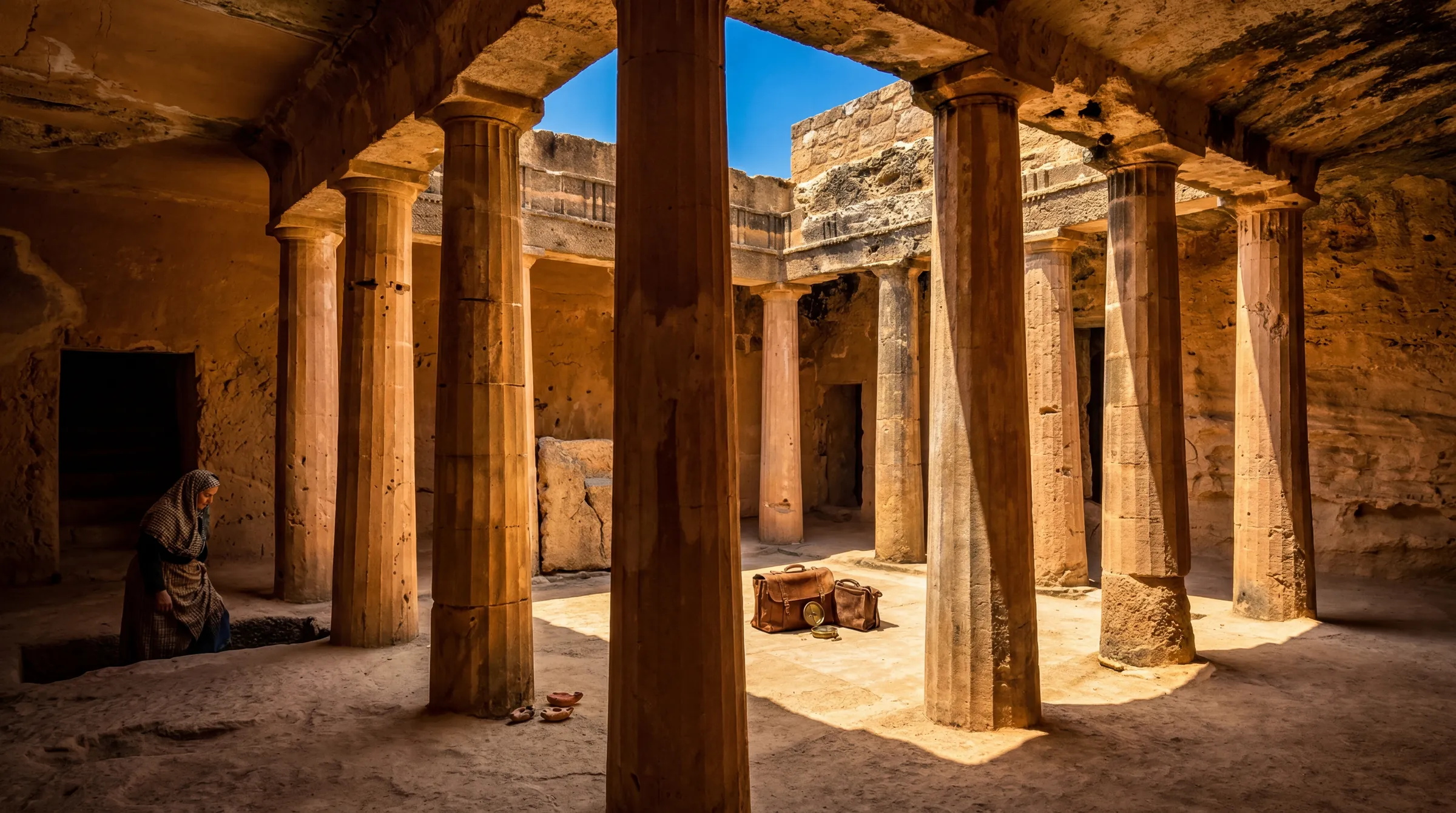
Tombs of the Kings
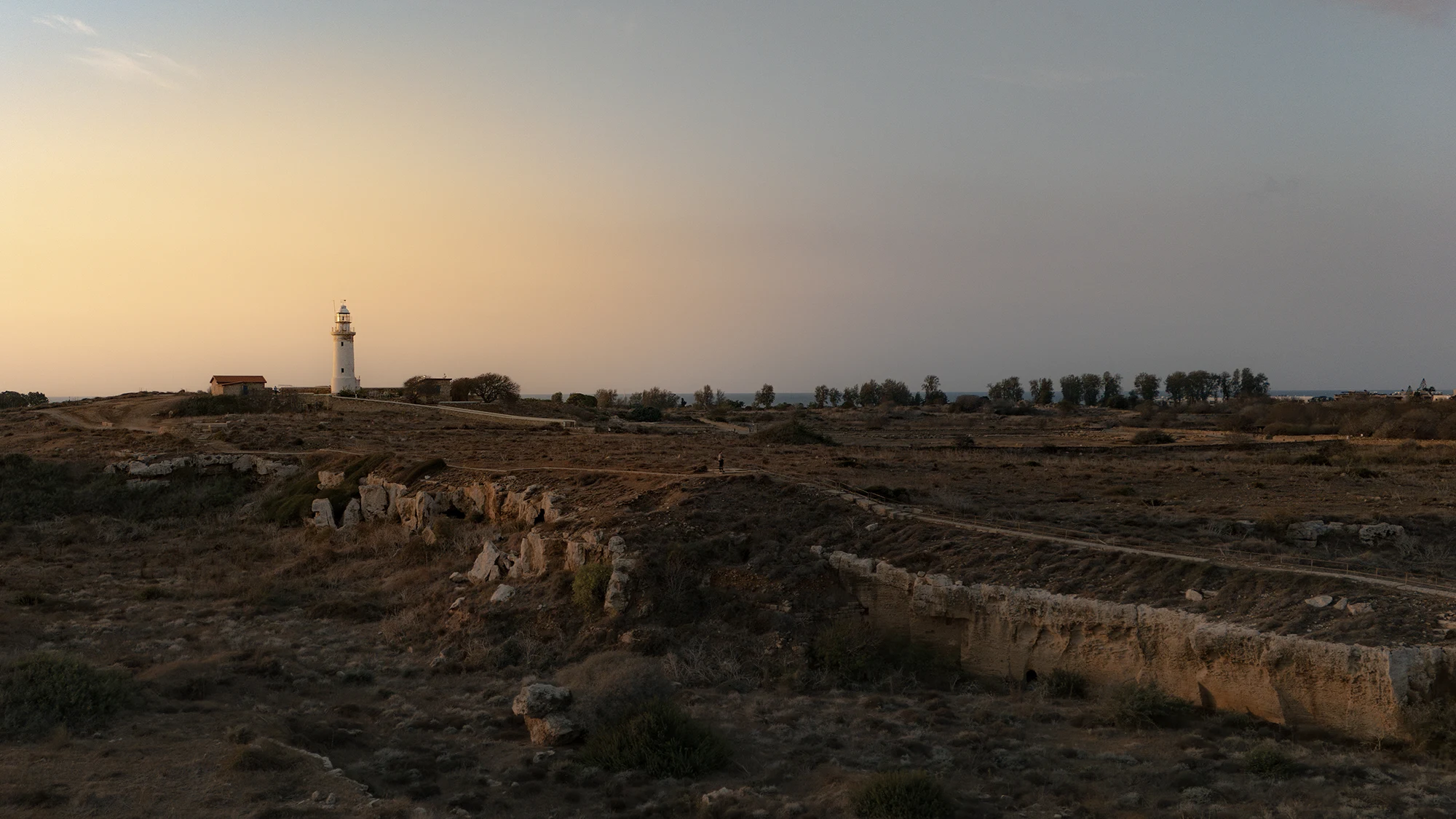
Two kilometres north of Kato Pafos, this UNESCO World Heritage necropolis dates to the 4th century BC. Despite the name, no royalty was interred here — the tombs belonged to high-ranking officials of the Hellenistic and Roman periods. Carved from solid rock, the underground chambers feature impressive atria surrounded by Doric columns, an architectural grandeur that earned them their regal title.
03 — Sacred Art
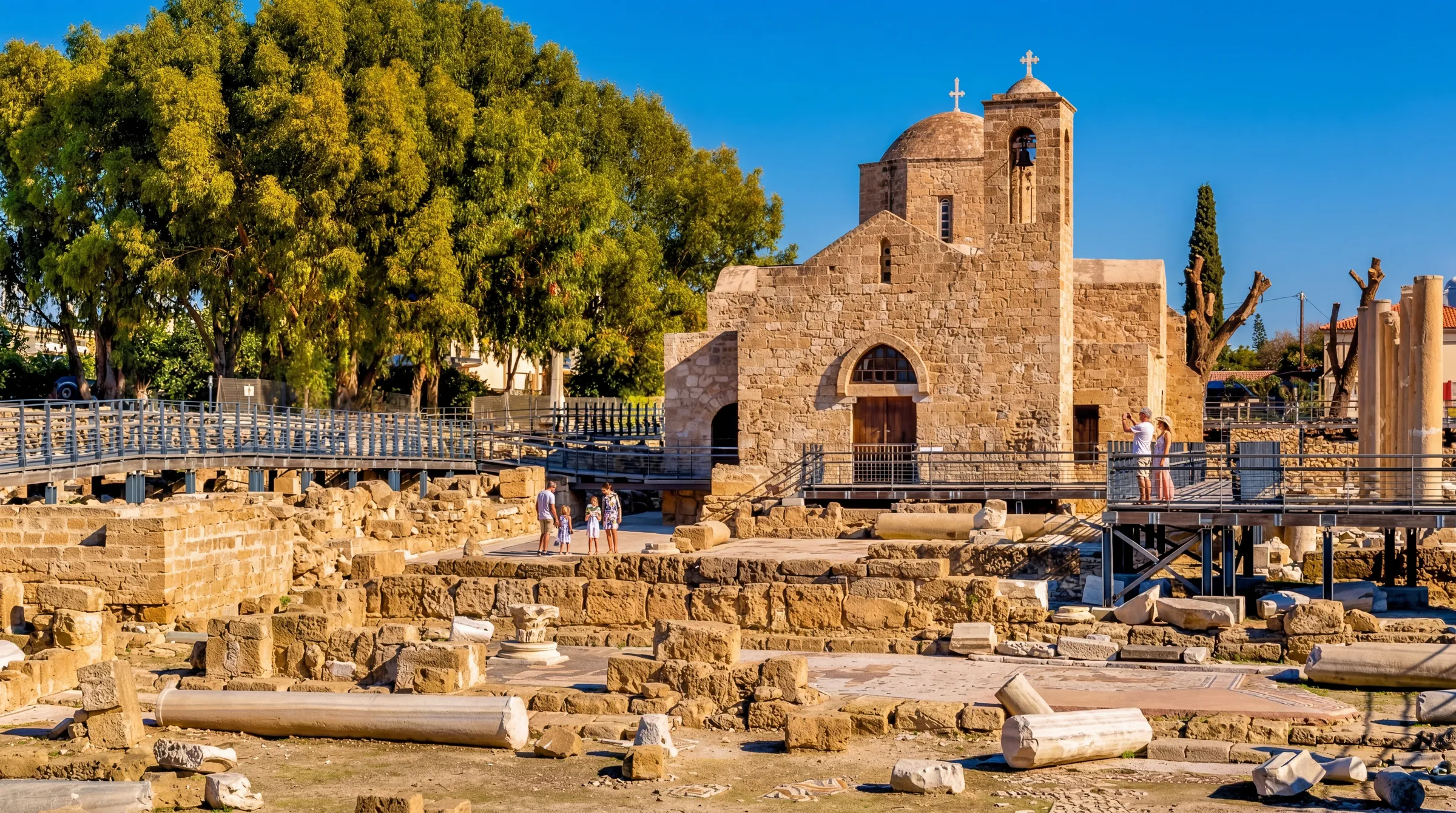
Byzantine Churches & St Paul's Legacy
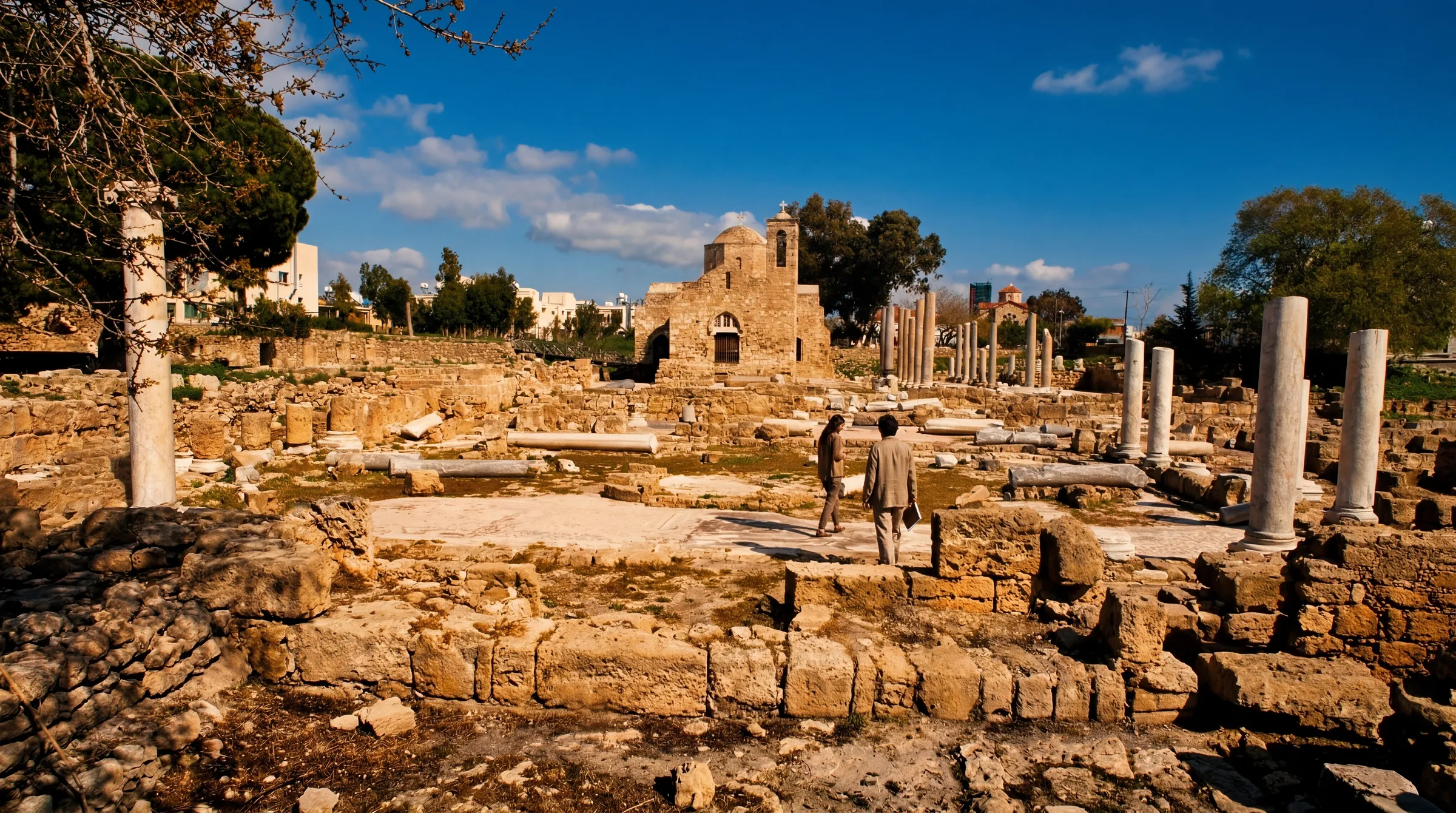
Cyprus was the first country governed by a Christian administration. The Apostles Paul and Barnabas arrived here, and in 45 AD St Paul was flogged at a stone pillar before the Roman Governor Sergius Paulus. Panagia Chrysopolitissa, a 13th-century church built over a Byzantine basilica — the largest excavated basilica in Cyprus — marks the site. The Byzantine Museum preserves icons dating from the 7th century AD, each one a window into the island's deep spiritual heritage.
Where Every Stone Has a Story
The Essentials
Six Sites Not
to Miss
Paphos Archaeological Park
Roman mosaics, the Odeon, the Agora, and the Asklepieion — the entire western headland of Kato Pafos is an open-air museum spanning centuries of classical civilisation.
Monumental underground tombs carved from rock, with columned atria that still command awe two and a half millennia after they were built.
Standing guard at the harbour entrance, this fortress was originally a Byzantine fort before the Lusignans rebuilt it in the 13th century. The rooftop offers commanding views across the harbour and the sea.
A village enclosed by three mountains with views stretching to the Gulf of Morphou. Its Kefalovryso spring, built in 1908 with six carved faucets, still flows. The 15th-century Agia Aikaterini church and a remarkable history — including Cyprus's only casino from 1880 — reward the drive.
Called the Meteora of Cyprus, this is the island's largest monolith — part of the Mammonia Geological Complex and a protected geological area. Its sheer scale defies expectation.
A single-room vaulted chapel with stone walls nearly a metre wide. Small enough to feel intimate, old enough to feel sacred. One of the quietest places in the Paphos district.
The Collections
The Museums
Four museums across the district, each with a different lens on the same deep history. The Akamas Museums project won first prize at the 12th ECTN Awards 2025 in Sibiu, Romania, competing against 54 entries from 15 countries.
Archaeological Museum
43 Griva Digeni AveArtefacts spanning the Neolithic to the Roman period, housed in the district's principal archaeological collection. A concise, well-curated survey of five millennia.
Mon–Fri 8:00–16:00 · €2.50
Google MapsByzantine Museum
Sacred ArtIcons dating from the 7th century AD, liturgical vestments, manuscripts, and ecclesiastical silverwork. The collection illuminates the island's deep Christian heritage.
€4.00
Google MapsEthnographical Museum
1 Exo Vrisis StTraditional Cypriot life rendered in textiles, tools, folk art, and domestic objects. A private collection that feels personal rather than institutional.
Mon–Sat 10:00–17:00 · €2.56
Google MapsPalaipafos Museum, Kouklia
Sanctuary of AphroditeBuilt beside the 12th-century BC sanctuary of Aphrodite, this museum connects the mythological with the archaeological. Finds from the surrounding excavations trace cult worship across centuries.
€4.50
Google MapsBefore You Go
Entry Cards
Multi-site passes save time and money: 1-day €8.50, 3-day €17, 7-day €25. Available at any major site ticket office.
Timing
Arrive early morning for cooler temperatures and fewer crowds. Most sites open at 8:30 year-round.
Footwear
Comfortable, sturdy shoes are essential. The terrain across archaeological sites is uneven, with loose stone and exposed rock.
The Concierge Arranges Your Tour
Private guides, site-by-site itineraries, transport — our team handles every detail so you can focus on five thousand years of history.
Book a Tour